Architecture of Vladivostok: historical buildings of the city
Опубликовано: 09.04.2025 | Обновлено: 05.05.2025
If you are planning a walk around the city and want to not just pass by, but really understand Vladivostok, start with its iconic buildings.
Historical administrative buildings of Vladivostok
Railway station
The final point of the Trans-Siberian Railway - the station building resonates with everyone who sees it for the first time. Built in the early XX century, it copies the architecture of the Yaroslavl railway station in Moscow, symbolically connecting the two ends of the country. Pay attention to the patterned casings and turrets - the pseudo-Russian style here is not just a decor, but part of the architectural ideology of Russia at the beginning of the century.
Post office on Svetlanskaya, 41
This is not just a building where you can send a postcard. Built in 1899, the post office retained elements of the Russian style with decorative brickwork and a tent-style roof. It is convenient to include it in the walking route along Svetlanskaya Street - go inside to see the ancient arches and atmospheric windows.
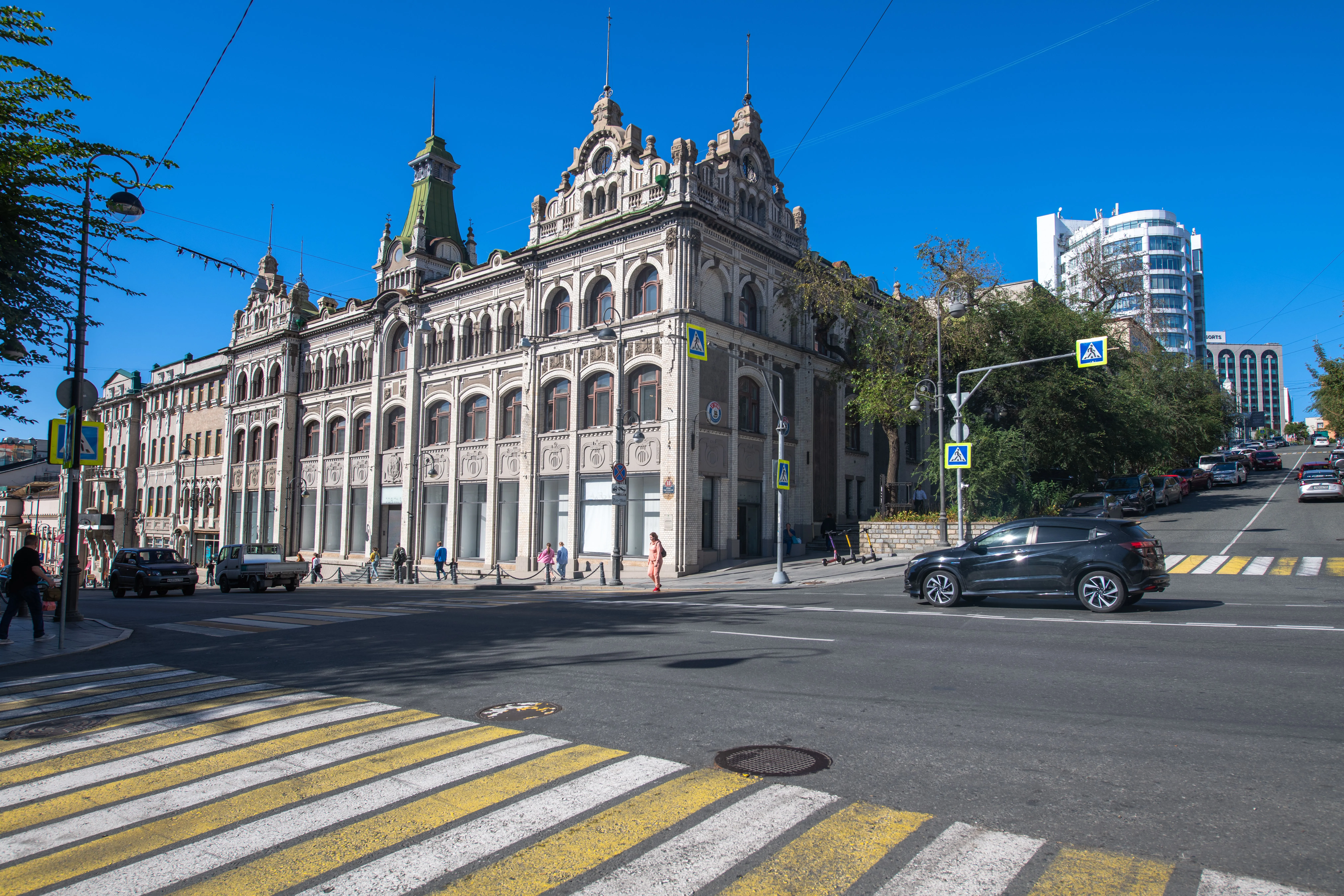
GUM (formerly "Kunst and Albers")
The trading house founded by German merchants was the largest department store in the entire Far East. Arched galleries, stained glass windows, strict symmetry of the facade - all speaks of how actively Vladivostok was included in world trade before the revolution. There is a department store here.

Hotel "Versailles"
Existing hotel, where you can stay and literally transfer to the era of the early XX century. Interior in Art Nouveau style, stucco, wide stairs - this is not stylization, but the original atmosphere, which is carefully preserved.
The Babintsev House (Museum-Reserve of the History of the Far East)
Sometimes a profitable house, then a bank, then a museum. Babintsev House is a symbol of the architectural taste of Vladivostok. It was designed by Ivan Meshkov, one of the first architects of the city. Now here is the State United Museum-Reserve of the History of the Far East named after V.K. Arsenyev, and, in addition to the expositions, be sure to pay attention to the balconies, stucco and light newspaper on the facade

To learn more about architectural landmarks, check out the section "What to do. There is a convenient filter for historical buildings. Take a look there to make your own itinerary.
Cultural and spiritual monuments of architecture
The Temple of the Assumption of the Most Holy Theotokos
It was built in the Byzantine style, restored at the beginning of the XXI century. This temple is an example of how Vladivostok carefully restores spiritual symbols. Located on a quiet street, ideal for a leisurely stroll.
Pushkin Theatre (formerly the Meeting of Officers)
One of the most elegant buildings in the city. The theater today works as a cultural platform: you can not only admire the facade in the Gothic style, but also go to the play.
The Church of St. Paul (Lutheran Church)
The building of 1909. It is interesting for its conciseness, strict Gothic windows and the history of the German diaspora of Vladivostok. The original brickwork has been preserved.
Catholic Church of the Most Holy Mother of God
Neo-Gothic architectural monument with stained glass windows, arched windows and spires. It is an active temple, as well as a cultural heritage site accessible to tourists.

House of famous people of Vladivostok
Brynner Mansion
Located on Aleutskaya Street. Here lived the family of the founder of a large steamship company Julia Brynner. In the same house was born the famous actor Yul Brynner. The object is in the style of Romantic Art Nouveau with a tower and a bay window.
Sollogub Estate
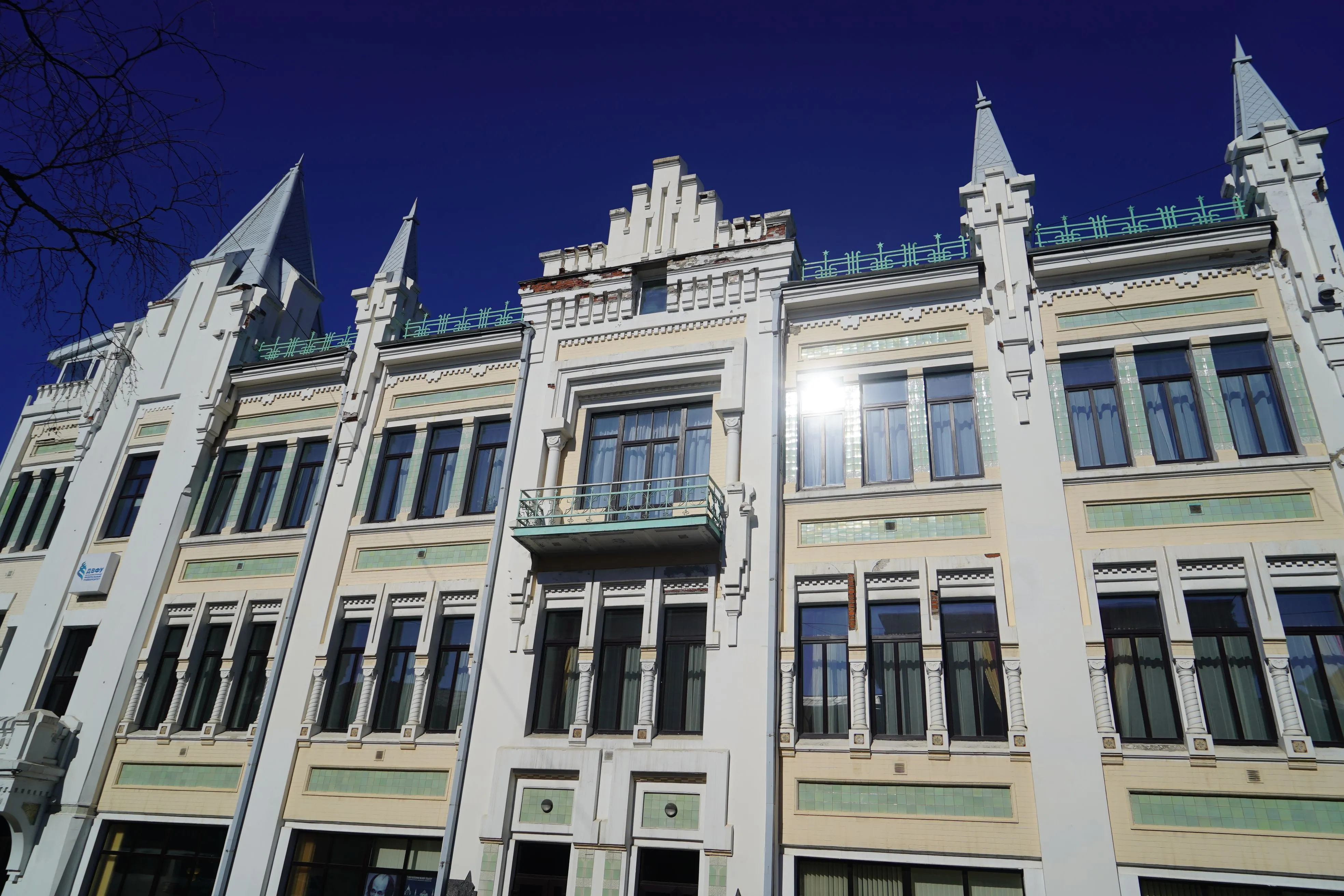
Gothic castle in the center of Vladivostok. Built in the 1880s, it is the oldest stone building in the city. On its background, spectacular photos are obtained, and the atmosphere is as in the film about Sherlock Holmes.
Skidelsky's apartment buildings
Located on Admiral Fokin Street. It was the first residential complex in the city with running water, electricity and steam heating. Now there are shops, cafes and galleries in the buildings, so you can go here not only for the sake of history.